The Changing City: How Urban Life Is Adapting to New Ways of Living
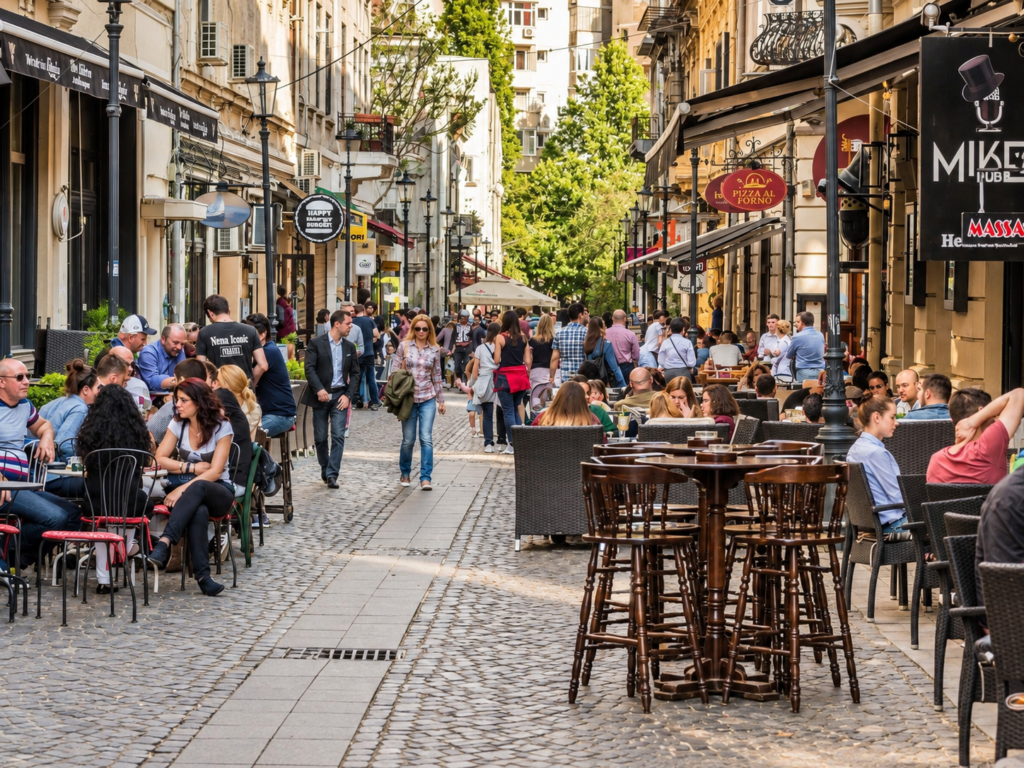
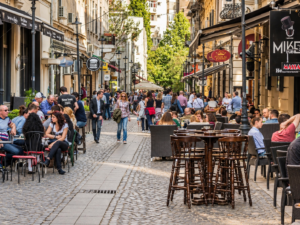
A city can change dramatically without a single new skyscraper appearing on its skyline. Cafés become informal workplaces, former office districts turn into residential neighbourhoods, public squares host markets and performances, and streets once dominated by traffic begin to accommodate more walking and cycling. These changes may seem small individually, but together they influence how people experience urban life.
For much of the modern era, cities were organised around a fairly predictable routine. People travelled to work, spent their evenings at home and visited central districts for shopping, entertainment or special occasions. Today, that pattern is becoming less uniform. Remote work, rising housing costs, digital services and changing expectations about leisure are reshaping the relationship between people and the places where they live.
The challenge for cities is to adapt without losing the qualities that make urban life attractive in the first place. Density can create opportunity, diversity and cultural energy, but it can also produce congestion, expensive housing and a sense that everyday life requires too much time and effort. The most successful cities will be those that make daily routines easier while giving residents more reasons to explore, participate and connect.
The City Centre Is Finding a New Purpose
For generations, the central business district was the engine of urban activity. Offices brought workers into the city each morning, restaurants served the lunchtime crowd, and shops benefited from the steady movement of people throughout the day. This arrangement shaped everything from public transport schedules to the design of commercial streets.
Remote and hybrid work have weakened some of those routines. When employees no longer need to commute five days a week, the office district loses part of its regular audience. Restaurants and retailers may experience less predictable demand, while streets that once felt busy throughout the working week can become noticeably quieter.
Research published by Gensler in 2026 highlights this contradiction. Its City Pulse study, which surveyed more than 35,000 residents across 75 cities in 30 countries, found that 73% rated their downtowns highly, yet fewer than half visited them at least once a week. The findings suggest that people have not necessarily lost their affection for city centres; rather, those centres may not offer enough reasons to visit regularly.
This is encouraging because it points towards a practical solution. Instead of trying to recreate the old pattern of daily office commuting, cities can make central districts useful at different times and for different purposes. Housing, independent shops, cultural venues, public spaces and evening activities can attract a wider range of people than offices alone.
The change is already influencing how planners think about downtown development. Underused office buildings can sometimes be converted into homes, while streets can be redesigned to accommodate outdoor dining, public events and more comfortable pedestrian movement. Such transformations are not always easy: office buildings may have unsuitable layouts, conversions can be expensive, and new housing still needs access to light, transport and essential services.
Nevertheless, the broader direction is clear. A successful city centre increasingly needs to function as a place to live, meet and spend time, rather than as a destination people enter only because their jobs require it.
Everyday Convenience Is Becoming a Measure of Urban Quality
One of the most important changes in urban planning is the growing recognition that the quality of a city is determined by ordinary routines as much as by major attractions. A spectacular skyline may impress visitors, but residents experience their city through school runs, grocery shopping, commuting, appointments and the search for somewhere to relax after work.
When these activities require long journeys, complicated transfers or constant dependence on a car, urban life becomes more tiring. By contrast, neighbourhoods where essential services are accessible within a reasonable distance can give residents more control over their time.
This thinking is often associated with the idea of the 15-minute city, in which many daily needs can be reached within a short walk or bicycle ride. The concept is not a rigid formula, and it cannot be applied identically everywhere. Dense urban centres, sprawling metropolitan regions and cities with difficult climates face different constraints. Its central principle, however, is widely relevant: people benefit when their homes are connected to the services and activities they use most often.
Recent research on urban planning and well-being reinforces the importance of accessibility, walkability, green space and housing quality. A 2026 review of research into the built environment found that these factors can influence subjective well-being, while public transport and accessible meeting places can support social interaction and reduce exclusion.
The implications extend beyond convenience. A resident who can walk to a shop or meet a friend in a nearby park may have more opportunities for spontaneous interaction. Someone with reliable public transport can access a wider range of jobs and services without owning a car. Parents may find it easier to manage family routines when schools, playgrounds and essential shops are located close to home.
These benefits depend on thoughtful planning rather than proximity alone. A neighbourhood needs safe crossings, usable pavements, accessible buildings and services that remain affordable. A nearby bus stop offers little advantage if buses are unreliable, while a local shop does not solve accessibility problems if residents cannot afford its prices.
The goal is to make everyday life less complicated, allowing people to spend more time on activities they value.
Public Spaces Are Becoming Part of Daily Life
Parks, squares, libraries, pedestrian streets and outdoor seating areas have always played a role in urban life. Their importance is becoming more visible as people look for places to spend time outside their homes and workplaces without having to make a purchase.
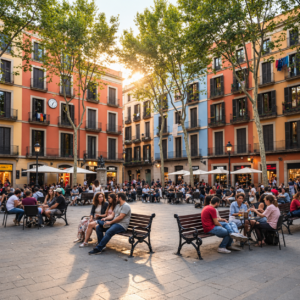
A public square can accommodate a market in the morning, provide somewhere to sit during the afternoon and host a performance in the evening. A library may offer quiet study areas, community events and access to digital resources. Even a well-designed street corner with trees and seating can become a useful meeting point.
These spaces matter because not every social activity takes place in a home, office or commercial venue. People need environments where they can encounter one another informally, spend time alone without feeling isolated or participate in community life without significant expense.
Gensler’s 2026 City Pulse research found that walkability and strong cultural and entertainment offerings rank among the leading attractions for downtown visitors. The study also found that 40% of respondents wanted their ideal downtown in ten years to combine housing, shops and offices in a lively mixed-use environment.
The findings support a broader understanding of public space. A successful city does not simply provide somewhere to pass through; it offers places where people want to remain. Seating, shade, lighting, accessible paths and nearby activities can make a substantial difference to how welcoming a space feels.
However, public spaces must work for different groups. Older residents may need benches and accessible paths, children need safe places to play, and people with disabilities require routes that do not turn an ordinary outing into an obstacle course. Women and other groups who feel unsafe in poorly lit or isolated areas may also experience the same space differently from others.
Good urban design recognises these differences. Rather than treating public space as decoration between buildings, it makes the space itself an essential part of the city’s everyday infrastructure.
Technology Is Changing the Rhythm of Urban Living
Digital services have made many urban routines more flexible. Residents can work from home, order groceries, arrange transport, book appointments and access entertainment without following the schedules that once structured city life. For people with demanding jobs or limited mobility, these services can save considerable time.
Yet technology also changes how people interact with their surroundings. When shopping, entertainment and communication can all happen online, there may be fewer reasons to leave home unless a city offers something that cannot be easily reproduced on a screen. Local businesses and cultural venues must therefore compete not only with other places but also with the convenience of staying at home.
This helps explain why the physical and digital city increasingly need to complement one another. Online systems can make public transport easier to navigate, help residents discover local events and improve access to municipal services. But digital convenience works best when it supports an attractive physical environment rather than replacing it.
There are also limits to the benefits. Not everyone has reliable internet access, the necessary devices or the confidence to use digital platforms. Cities that move essential services entirely online risk excluding residents who already face barriers. Privacy and data security also matter when public authorities use digital systems to manage transport, utilities or public spaces.
The most effective approach is to use technology where it solves a genuine problem while maintaining accessible alternatives. A city can offer digital ticketing without abandoning physical payment options, and it can improve online public services while retaining in-person support for people who need it.
Technology should make the city easier to use, not turn participation in urban life into a test of digital access.
Housing Costs Are Reshaping Where People Live
Urban life depends heavily on the relationship between housing and opportunity. Cities attract people because they concentrate jobs, education, culture and services, but the cost of living near those advantages can push residents towards distant suburbs or smaller communities.
The result is often a difficult trade-off. A household may find more affordable housing farther from the centre but spend additional time and money commuting. Another may choose a smaller home in a well-connected neighbourhood to preserve access to work and social life. Neither decision is purely about property: each affects how people organise their days.
UN-Habitat’s World Cities Report 2026 describes housing affordability and access as central challenges for urban development. Its analysis highlights how rising costs and poorly coordinated planning can contribute to residential segregation, limiting access to jobs, services and safe living environments. The report also warns that urban sprawl can increase infrastructure costs and push lower-income workers into longer commutes.
These pressures influence the character of neighbourhoods as well. When housing becomes unaffordable, young workers may struggle to remain near employment, families may move farther from established support networks, and essential workers may be unable to live close to the communities they serve.
There is no single housing policy that can resolve every city’s difficulties. Different places need combinations of new construction, renovation, affordable rental housing, better transport and planning that connects residential development with employment and services. Converting suitable vacant buildings into homes can help in some locations, but it cannot replace the need for a broader housing strategy.
For residents, the issue is ultimately about choice. A well-functioning city should offer different types of housing and neighbourhoods, allowing people to adapt their living arrangements as their circumstances change without losing access to essential opportunities.
The Neighbourhood Is Gaining Importance
As daily life becomes more flexible, the neighbourhood can take on a greater role in how people experience a city. Hybrid workers may spend more time in local cafés or libraries, families may rely on nearby parks and shops, and residents may develop stronger connections with places they use regularly.
This does not mean that everyone wants a tightly knit community or that local life can replace the wider opportunities offered by a major city. People still need access to specialised healthcare, universities, large workplaces, cultural institutions and services that may be spread across a metropolitan area. The challenge is to connect local convenience with citywide mobility.
Neighbourhoods can also become more socially diverse when they provide a mix of housing, public facilities and commercial activity. Streets with homes, shops and community spaces tend to offer more reasons for people to be present at different times of day than areas dedicated to a single function.
Yet neighbourhood improvement can create its own difficulties. New cafés, parks and transport links may increase demand for housing and raise local rents. If existing residents are priced out, they may lose access to the improvements they helped make valuable. Urban renewal therefore needs to consider affordability and community participation alongside physical design.
A successful neighbourhood is not simply attractive to newcomers. It should remain practical and welcoming for the people who already live there, including older residents, families, young adults and those with limited incomes.
A Better City Is Built Around Real Lives
The future of urban life will not be determined by a single architectural style, transport technology or planning concept. Cities have different histories, climates, economies and population structures, so their priorities will vary. Some need to improve public transport, others must address housing shortages, and many need to make their centres more useful outside traditional working hours.
What connects these challenges is the need to understand how urban systems affect everyday experience. Transport determines how much time people spend travelling. Housing influences whether they can live near work and family. Public spaces shape opportunities for recreation and interaction, while local services affect how easily people manage routine tasks.
The OECD’s 2026 research on inclusive growth in cities makes a related point: economic growth alone does not guarantee that residents benefit equally. Access to employment, quality housing, infrastructure and urban amenities must also be considered if cities are to distribute opportunity more fairly.
That means measuring urban success through more than investment figures or the number of new buildings. It also means asking whether residents can reach the places they need, whether neighbourhoods remain affordable, whether public spaces feel welcoming and whether people have genuine choices about how they live.
Cities will continue to grow and change, but their most important achievements may be found in ordinary moments: a shorter commute, a comfortable place to sit outdoors, a useful service within walking distance or a lively street where people want to spend time.
These details rarely dominate headlines, yet they shape the experience of millions of residents every day. The changing city is ultimately not just a story about new buildings or technologies. It is a story about making urban life more convenient, connected and adaptable to the people who live it.