Designing for Everyday Life: Why Good Architecture Is About More Than Appearance
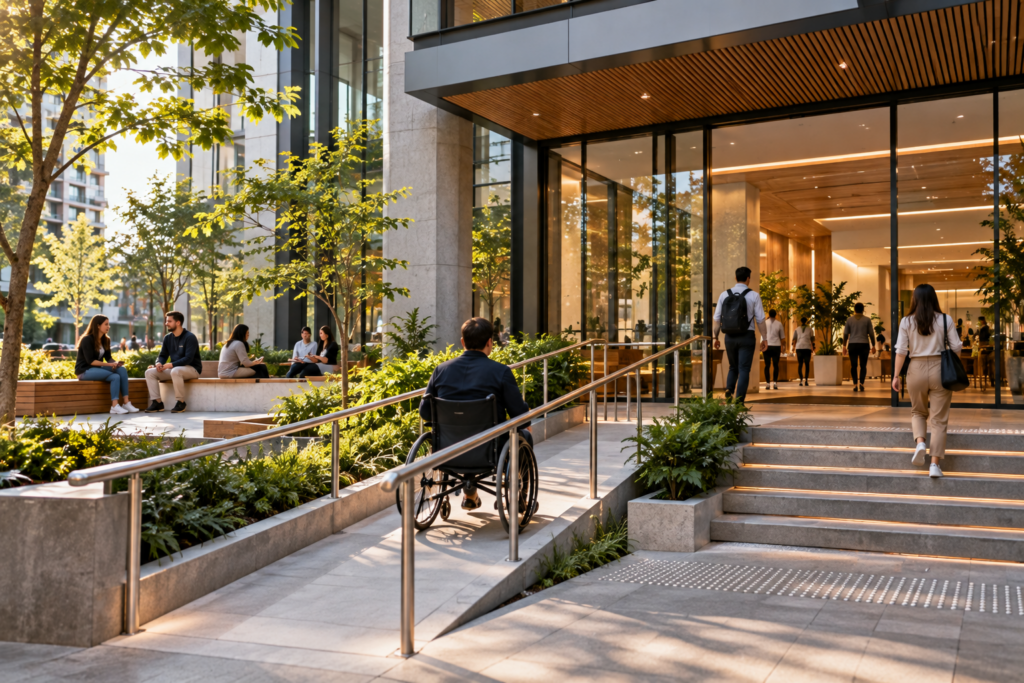
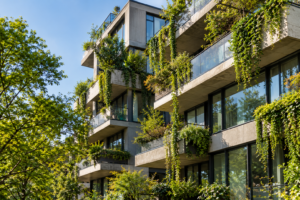
Architecture is often judged by what can be seen from a distance. A striking facade, an unusual silhouette or an impressive interior can turn a building into an architectural landmark, and photographs naturally emphasize these qualities because they are immediate and easy to communicate. Yet people rarely experience architecture from a distance. They enter buildings, wait in corridors, search for entrances, move through public spaces, listen to the sounds around them and spend hours inside rooms whose qualities may never appear in a photograph.
This is why some visually impressive buildings can feel surprisingly uncomfortable, while relatively modest structures can become places people genuinely enjoy using. Architecture is not experienced as a static image but as a sequence of everyday interactions. The position of a doorway, the quality of daylight, the distance between two rooms, the acoustics of a corridor or the availability of somewhere to sit can influence how people remember a place just as strongly as its exterior appearance.
Good architecture therefore begins with a simple question: how will people actually live, work and move within this space? The answer affects almost every decision that follows, from the arrangement of rooms to the choice of materials and the relationship between a building and the street outside. A successful design does not necessarily draw attention to all of these decisions. Often, its greatest achievement is making everyday activities feel natural.
Designing Around Real Human Behavior
A useful building starts by understanding what people are likely to do inside it rather than assuming that a predetermined floor plan will automatically produce a successful environment. A home needs to support cooking, sleeping, working, socializing and storage. A hospital has to accommodate patients, visitors, doctors and support staff, each moving through the building for very different reasons. A school must provide places for concentration, movement, communication and rest while remaining understandable to children and adults alike.
These requirements may sound obvious, but they can become surprisingly complicated in large architectural projects. An entrance that looks impressive but is difficult to recognize from the street creates an immediate problem. A corridor that forces people to make several unnecessary turns can make an otherwise elegant building confusing. A public space with nowhere comfortable to sit may technically provide open space without giving people much reason to stay there.
The strongest designs tend to anticipate these ordinary moments. They consider where people will naturally pause, what they will need to see when they arrive and how they will understand the relationship between one space and another. When this works well, users rarely think about the design decisions behind the experience. They simply know where to go and feel comfortable once they arrive.
Accessibility as a Measure of Better Design
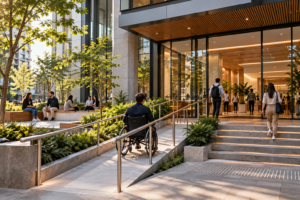
Accessibility is often discussed as a specialized architectural requirement, but many of the principles associated with accessible design improve spaces for a much wider population. A step-free entrance can help wheelchair users, parents with strollers and travelers carrying luggage. Clear signage can assist people with visual or cognitive difficulties while also helping anyone unfamiliar with a building. Elevators, generous circulation routes and carefully positioned handrails can make movement easier for people of different ages and physical abilities.
This changes the way accessibility should be understood. It is not simply about adding special features for a particular group after the main design has been completed. It is about reducing unnecessary barriers from the beginning so that as many people as possible can use the same environment comfortably.
The idea of universal design takes this principle further. Instead of creating separate solutions for different users, architects can look for ways to make entrances, circulation, furniture, lighting and information systems more intuitive for everyone. A building designed this way often feels more generous because it does not require people to explain why they need a particular accommodation.
That is especially important in public architecture. A museum, railway station, university or civic building should not make people feel as though they are navigating a system designed for somebody else. Good design quietly removes that sense of exclusion.
Movement Is Part of the Architectural Experience
People experience buildings through movement, and the journey between spaces can be just as important as the spaces themselves. The route from the street to an entrance, from reception to a particular room or from a public area to a quieter part of a building creates a sequence that influences how people understand the whole environment.
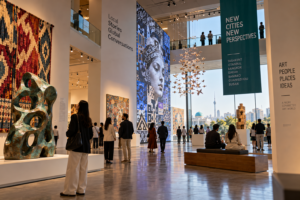
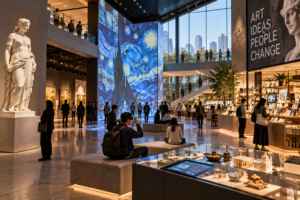
This becomes particularly important in large public buildings such as hospitals, airports, universities and museums. These places can contain enormous amounts of information and complicated circulation systems, and when visitors cannot understand where they are going, even beautiful architecture can become stressful. Good wayfinding reduces that uncertainty, but it does not depend entirely on signs.
Architecture itself can communicate direction. Changes in ceiling height, natural light, flooring, materials and views can help people understand where they are. A staircase placed in a visible position can become an obvious destination rather than something hidden behind a corridor, while a courtyard or large window at the end of a passage can provide a reference point that helps people orient themselves.
The most effective wayfinding is therefore often partly architectural. Instead of forcing people to read instructions at every stage, the building gives them enough visual and spatial information to understand where they are and where they need to go.
The Quiet Power of Natural Light
Few elements influence the character of a building as strongly as light. Natural daylight can make an interior feel larger, calmer and more connected to the outside world, while the changing intensity and direction of sunlight throughout the day can give a room a sense of time.
But successful daylight design is not simply a matter of installing the largest possible windows. Excessive direct sunlight can create glare and unwanted heat, while poorly positioned openings can make certain areas uncomfortable during particular hours. The architectural challenge is therefore to control daylight rather than simply maximize it.
Shading devices, recessed windows, screens, curtains and carefully positioned openings can all shape the quality of natural illumination. Artificial lighting then extends this system into the evening, allowing different areas to support different activities without making the entire interior uniformly bright.
This is why lighting should be considered part of architecture rather than a decorative layer added at the end. The quality and direction of light influence how people perceive the size of a room, where they naturally look, how comfortable they feel while working and whether an environment seems energetic or relaxed.
Buildings Have an Acoustic Character Too
Sound is another part of architectural experience that tends to become noticeable only when it has been handled badly. A restaurant with excessive background noise can make conversation tiring. An office with constant distractions can make concentration difficult, while poor acoustics in a classroom can make communication harder for both teachers and students.
The physical properties of a room have a major influence on these experiences. Hard surfaces reflect sound, while softer materials absorb it, and the arrangement of ceilings, walls, furniture and partitions can determine how sound moves through a space.
This is particularly relevant to contemporary architecture because visual minimalism can sometimes produce acoustically difficult environments. Large open rooms, exposed concrete, glass and other hard surfaces may create a striking aesthetic, but without careful acoustic planning they can also produce echoes and persistent background noise.
Good design therefore has to consider what a room sounds like as carefully as what it looks like. A visually restrained space can still feel warm and comfortable when its acoustic environment has been properly considered.
Public Space Needs to Give People a Reason to Stay
Architecture does not end at the walls of a building. The spaces between buildings — streets, courtyards, squares, parks and pedestrian areas — can be equally important to the character of a city.
An empty paved area is not automatically a successful public space. People need reasons to remain there, whether that means comfortable seating, shade, vegetation, attractive views, nearby activity or protection from heavy traffic. A successful square can accommodate several kinds of behavior at once: people may cross it on their way somewhere else, meet friends, sit quietly, eat lunch or attend an event.
The architecture surrounding these spaces plays an important role. Buildings can contribute through entrances, arcades, balconies, transparent ground floors and active commercial or cultural uses. When buildings turn their backs on the street, public space can feel empty even when it is physically large. When they interact with it, the same amount of space can become much more active.
This relationship is particularly important in dense cities. Public space provides opportunities for people to encounter one another without necessarily sharing a workplace, home or social circle. Architecture cannot create community by itself, but it can make casual interaction easier.
The Importance of Small Decisions
Some of the most influential architectural decisions are surprisingly ordinary. The height of a bench can determine whether people want to sit for a long time. The position of a handrail can make a staircase more comfortable. A door that opens into a narrow passage can create repeated inconvenience, while poorly positioned lighting can produce glare that becomes irritating every evening.
These details are easy to overlook when a project is being considered primarily as a large visual composition. Yet people encounter them repeatedly, and repetition gives small inconveniences an importance that is difficult to see in architectural drawings.
A good designer therefore has to imagine the building from the perspective of everyday behavior. Where will someone put a bag while opening a door? Where will a parent wait with a child? Where will people stop to check their phones without blocking a passage? Where can someone sit if they need a few minutes of rest?
The architecture of everyday life is built from these moments. They may never appear in a professional photograph, but they can determine whether a place feels genuinely successful.
Designing for Different Rhythms of Life
People also use the same environments at very different speeds. Some places are designed to move large numbers of people efficiently, while others need to encourage people to slow down. A transit station has to prioritize circulation, whereas a library requires spaces where people can remain quietly for hours. A public square may need to accommodate pedestrians passing through as well as visitors who want to sit and stay.
Good architecture does not necessarily prescribe one form of behavior. Instead, it can provide a range of spatial conditions that allow different activities to coexist.
A building might combine open areas with smaller rooms, active zones with quieter ones and direct circulation routes with places where people can pause. This variety gives users more freedom to choose how they occupy the environment.
Such flexibility becomes increasingly important as buildings accommodate more diverse patterns of work and social life. The goal is not to make every space neutral, but to create environments that can support different people without becoming rigid or confusing.
Safety Without Creating Defensive Architecture
Safety is an essential part of public design, but a space can become uncomfortable when security is expressed entirely through barriers, restrictions and visible surveillance.
Architects can often create a stronger sense of safety through the arrangement of the environment itself. Good visibility, clear routes, adequate lighting and active ground floors allow people to understand their surroundings and increase the possibility of natural observation.
This is one reason mixed-use neighborhoods can feel more active than areas that become completely empty outside working hours. When homes, shops, restaurants, offices and public facilities occupy the same environment, people are present at different times of the day.
The principle is relatively simple: people tend to feel more comfortable in places that are understandable, visible and naturally occupied. Security does not have to make architecture feel hostile.
Buildings Should Be Able to Change
A building may be designed for a particular purpose, but its users and circumstances will inevitably change. Families grow and reorganize, businesses alter their working patterns, technologies become obsolete and public institutions develop new needs.
Architecture that assumes one permanent pattern of behavior can therefore become outdated surprisingly quickly.
Adaptability has become an important part of long-term design. A home may benefit from a room that can change from an office to a bedroom. An office may need spaces that can be rearranged as teams and working practices evolve. A public building may need to accommodate exhibitions, meetings or events that were not part of its original program.
Flexibility does not mean that architecture should become completely generic. A successful building can have a strong identity while still allowing reasonable changes in use.
The deeper idea is resilience. A building that can accommodate change has a better chance of remaining useful rather than becoming obsolete whenever its original assumptions no longer apply.
Architecture Can Influence How People Meet
Buildings also affect social interaction in ways that are subtle but significant. A shared courtyard can encourage neighbors to encounter one another. A staircase can become a place for informal conversation rather than simply a route between floors. A workplace kitchen may become an important social center, while a carefully designed school corridor can support interaction as well as circulation.
Architecture cannot manufacture relationships. Community depends on culture, institutions and individual choices, and no building can guarantee that people will become friends simply because they share a space.
What architecture can do is make certain forms of interaction easier.
This matters particularly in cities, where increasing density means that people from different backgrounds share the same streets, buildings and public spaces. A well-designed environment can provide places where people can coexist without needing a specific reason to be there.
That is one of architecture’s quieter social functions, and one that becomes more important as urban life grows denser.
The Real Measure of Good Design
Architecture will always have an aesthetic dimension. Buildings can create landmarks, express cultural values and contribute to the identity of a neighborhood or city. There is nothing wrong with designing something visually ambitious.
The problem begins only when appearance becomes the primary measure of success.
A building should also be judged by what happens after the photographs are taken. Can people navigate it without unnecessary confusion? Is it comfortable throughout the day and across different seasons? Can people with different physical abilities use it naturally? Does it provide an appropriate balance between privacy and interaction? Does it sound comfortable? Can its spaces adapt as circumstances change?
These questions do not make architecture less creative. They make creativity more meaningful.
The most successful buildings often combine a strong architectural idea with an unusually careful understanding of ordinary life. Their beauty is reinforced by the fact that they work, and their functionality does not prevent them from having character.
Perhaps that is the most useful way to think about architecture today. A building is not finished when its construction ends, because its real life begins only when people start using it. Over time, residents develop routines, workers discover preferred spaces, visitors learn familiar routes and communities attach memories to particular corners and rooms.
Architecture becomes successful when it supports those experiences naturally.
The strongest design may therefore be the kind that does not constantly demand attention. It gives people enough comfort, clarity and freedom to concentrate on their own lives. And when a building can do that while also possessing beauty and character, architecture moves beyond appearance and becomes something much more valuable: an environment that genuinely works for the people who inhabit it.